The Museum of Becoming
 July 18, 2026
 The Wonder of Understanding
I used to think that understanding something would diminish its magic.
It seemed intuitive enough. If we knew how music moved us, it would become nothing more than sound waves. If we understood dreams, they would become little more than neurons firing in the dark. If we explained love, surely we’d reduce it to chemistry. Explanation, I thought, came at the expense of wonder.
Somewhere along the way, I stopped believing that.
I still find myself looking for meaning in ordinary things: thinking about an old video and finding it waiting on my YouTube homepage, seeing the outline of an eye in the shape of a cloud, hearing a familiar song at exactly the moment I needed it. Whether these moments are coincidence or meaning has never interested me as much as the instinct behind them. Human beings seem almost incapable of leaving fragments alone. We gather them, arrange them, tell stories about them, searching for patterns that make the world feel coherent.

Perhaps that’s why psychology always felt beautiful to me.
Not because it promises to explain people away, but because it studies the very creatures who cannot stop searching for meaning. And much like music or thunderstorms, understanding the mechanisms of being human has never made humanity feel smaller. It has made it infinitely more astonishing.
I’ve often imagined psychology as an enormous museum. Not the kind where everything is finished and labelled, but one that is perpetually under construction. Corridors branch into more corridors. Rooms devoted to memory sit beside rooms devoted to attachment, language, emotion, and development. There are darker galleries too, housing the discipline’s failures with the honesty they deserve: theories shaped by prejudice, harmful practices justified by certainty, reminders that science is never untouched by the cultures that produce it.
The museum is unfinished. I hope it always will be.
Every new finding seems to open another corridor rather than close one. Every answer invites better questions. The longer I have studied psychology, the less I have felt that the discipline is trying to solve people. Instead, it has taught me to appreciate just how wonderfully difficult people are to understand.
For years, I believed I knew why I had chosen to study psychology. Like many students entering the field, I quietly hoped that understanding other people might eventually help me understand myself. Looking back, I don’t think that hope was naïve. I think it was simply incomplete. Somewhere between my first psychology class and completing my master’s degree, I realised that the question itself had changed. I hadn’t been searching for a hidden self. I had been searching for the process by which a self comes into being. That shift may sound subtle, but it has completely transformed the way I think about people.
We often speak about “finding ourselves,” as though identity were something buried beneath enough introspection, waiting patiently to be uncovered. Developmental psychology offers a gentler possibility. What if the self isn’t an object we discover, but a process we participate in? Long before we know ourselves, we are already being shaped. We inherit languages before we speak them. We absorb expectations before we learn to question them. We learn what closeness feels like, what conflict looks like, what success means, how emotions are expressed—or hidden—long before we consciously reflect on any of it. Families shape us. Friendships do. Schools do. Communities do. Culture does. Loss does. Joy does. Even chance leaves its fingerprints behind. By the time we first ask, Who am I?, countless experiences have already begun answering on our behalf.
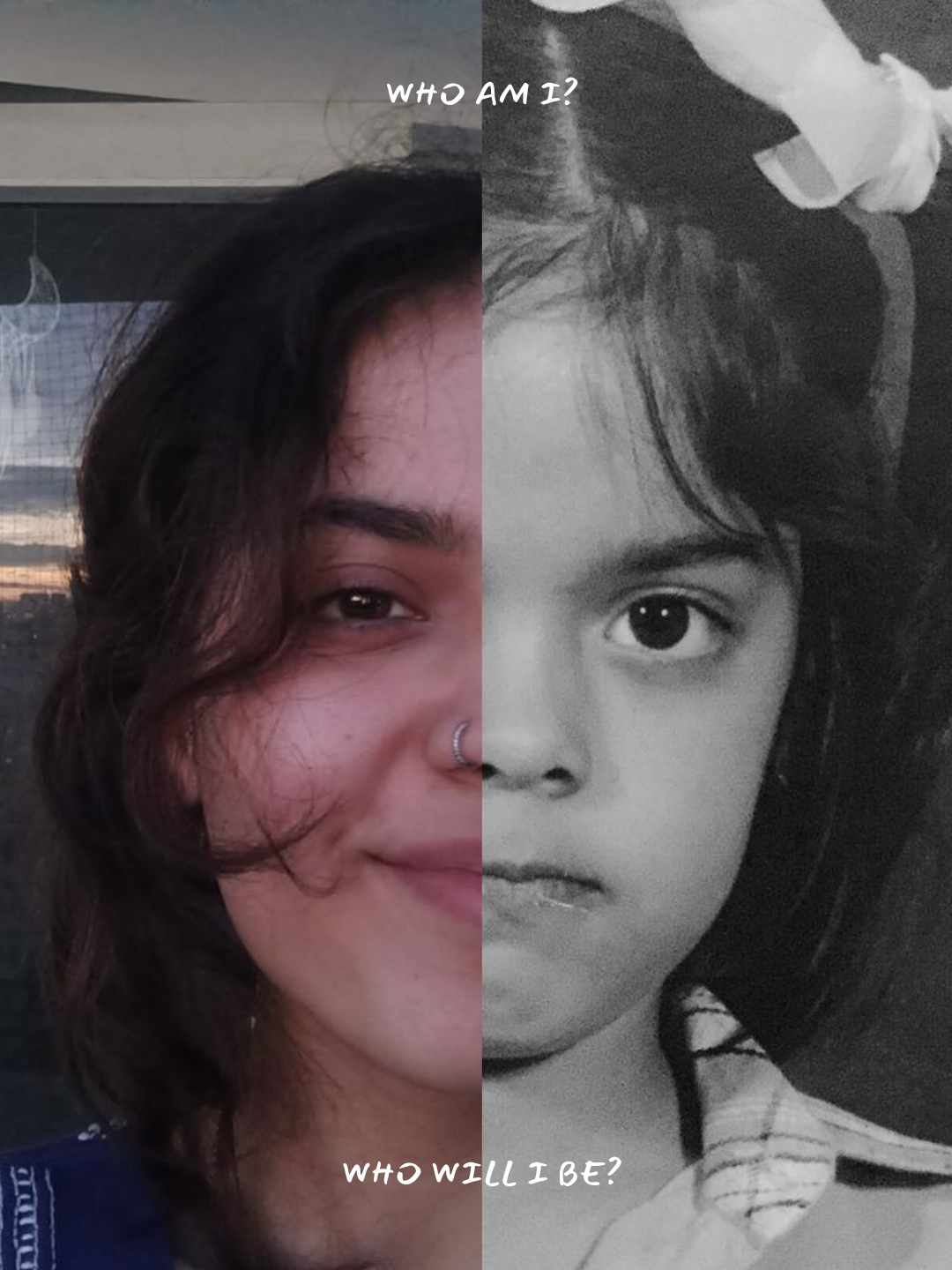
At first glance, that idea can feel unsettling. If so much of us has been shaped before we became aware of it, where does choice enter the picture?
Surprisingly, I find it hopeful. Because if development teaches us anything, it is that becoming does not end in childhood. We continue to be shaped by every relationship we nurture, every environment we inhabit, every story we choose to believe about ourselves, and every experience that asks something new of us. We are influenced by our histories, but we are not imprisoned by them.
Perhaps that is why developmental psychology is so often misunderstood. It is commonly thought of as the study of children, when in reality it is the study of becoming. Childhood simply happens to be where becoming is easiest to observe. The process itself never really ends. That idea has changed the way I think not only about myself, but about other people. If none of us is finished, then perhaps no one should be treated as though they are.
For therapists, this means meeting clients as people whose histories matter, without assuming those histories determine their futures. For teachers, it means recognising that every classroom contains not fixed abilities, but evolving possibilities. For parents, it means remembering that children are not projects to perfect but people continually negotiating who they are becoming. And perhaps for all of us, it means extending a little more patience—to others and to ourselves.
Studying psychology hasn’t given me definitive answers about who I am. If anything, it has made certainty more difficult. I know more about memory and trust my own recollections less. I know more about emotion and find feelings no easier to untangle. I know more about development and realise how impossible it is to separate what I chose from what first chose me.
But I no longer see that as a failure of the discipline.
Understanding has never diminished wonder. It has enlarged it.
July 18, 2026